Sunday, June 1, 2014

1930-1939: What Happened?!?

1930-1939:What Happened to American Fashion?!?


 Oh No! What happened?! There was some real change in the fashion of the 1920's but now it seems to have gone back to the long dresses of before... But I guess you can't blame the people... The Great Depression hit them pretty hard. So let's look at the fashion of the 1930's...

      Origins
         Since many of the women were encouraged to stay home during the Great Depression (to allow for more jobs for men during this time) they were feminized and lost their boyish look that they gained during the 1920's. They returned to elegance and long dresses but this time the dresses didn't restrict movement (from what I can see). Though there was a lot of focus on the waistline but not as much as in the 1900's-1919's. The source below can explain in more detail...

Primary Source: Typically, when people think of Great Depression-era fashion, exciting thoughts do not necessarily spring to mind.  Marking the end of Jazz Age decadence, the 1930’s are often thought of as a somber decade when it comes to fashion.  However, to be honest, the 1930’s are one of my favorite eras of fashion (besides the 1960’s).  Perhaps it is the existence of extreme opposites that interests me; the 1930’s saw both the bare minimum housedress of the typical woman simultaneously with the escapist Hollywood glamour of the pre-code silver screen.  As a sort of apology for the frivolity of the flapper fashion, women’s dresses dropped their hemlines and were typically constructed of more practical, less ornate fabrics.  The waistline assumed a more traditional, natural position.  The ideal look, however, continued in the art deco fashion- streamlined, long, lean.  Meanwhile, couture fashion pushed boundaries of the silhouette with the increased popularity of bias cut draping, as well as the influence of modern art movements, such as surrealism.  Modern hardware, such as the zipper, was also popularized throughout the 1930’s. In a sense, the 1930’s is the start of the sort of classic period of vintage fashion that lasted up until the early 1960’s, a period marked by ultra-feminine silhouettes existing at a time when women’s roles in America were increasingly traditional, acting as the build up and inspiration for the second wave of feminism.  The Great Depression insisted women stay home to allow for more chances for employment for men, a trend that would last until the factory boom of the 1940’s, only to re-emerge during the nuclear family-centric, suburban docility that was the 1950’s.  Thus, women’s fashion was further feminized and defined, drifting away from the boyish, masculine silhouette of the flapper.  With a few exceptions…

     Purpose
        This style wasn't necessarily "new" the waist line was more "natural" of course and the lower necklines are new but this style didn't cause the older generations to complain and there wasn't any problems with the style. The style could be seen as the fashion calming down from the extreme (for them... and a little for me I must admit (behavior wise)) of the style of the 1920's. The fashion style changed in the 1930's because there was a need to save money because of the Great Depression. So instead of buying new clothes every other month, they saved their clothes and made new ones with what they had.


2nd Primary Source: On October 24, 1929, Wall Street crashed and the Great Depression began. This would have a strong influence on women's fashion in the 1930s. Because of the need to save money, the average women could no longer buy new clothes every few months. Instead, they had to remake the clothes they already had, reusing any material that was on-hand. Only after clothes had been patched and mended beyond what was reasonable would they consider buying a new dress, or the fabric to sew a new one. Up until this time, the custom was for a person to change clothes a few times during the day, each time wearing the clothes appropriate for the activity, or for the time of day — a different set for morning, afternoon, and evening. Once the Depression took hold, this custom quickly began to be cast aside. Throughout the day, one would wear the same outfit, it would only be for certain occasions that one would change, such as donning evening wear when going out for the evening where more formal clothes would be warranted.


      Value
         The fashion of the1930's shows that the fashion in America died down. It shows this because in the 1920's many of the dresses were short and rebellious, but now the skirts were longer (but not restricting) the waist more shown (not without form like the square dresses of the 1920's) and a more emphasis on lady-like behavior.

     Limitations
         From the look of the fashion you can't really tell that the U.S. is going through a really bad economical crisis, but that's because we don't know how many different dresses the young women of this time had (the number of outfits was important to a girl in the 1920's but not so now...) We can't tell that the women are remaking their outfits when needed, but what we also can't tell is the struggling of many people who didn't have enough money to buy a new clothes or enough food for the family. We can't see the suffering of the lower class or the workers who work many, many, many hours for little pay.


1920-1929: Change is good?


1920-1929: Another decade of change in American clothing

     Origins
        The picture above is an example of the hair and clothing style that became popular in the 1920's. The women who had the hairstyle and the type of clothes that the woman in the picture above does, are known as flappers. Flappers are young women who, after the war decided to speak out against the current beliefs (back then) about the role of women in society. Before the flappers came into existence, men (and older women) believed that women belonged in the kitchen or around the house cooking, cleaning, making babies and then taking care of them. But after WWI many of the young women decided to change the role of women in society. And so with that decision a new type of fashion emerged. No longer were the dresses long enough to touch the ground like in the previous decade. Now the skirts were shorter (not drastically shorter mind you) but just short enough to show the ankles. The hairstyle also changed to match the dress. Before the 1920's women had long hair, but during the 1920's many young girls cut their hair short. The flappers were seen as rebels by the men and older women of the American society. But the flappers didn't care, they started to smoke and drink like the men. (Many older people on society saw this behavior as disgraceful).

     Primary Source: Many women celebrated the age of the flapper as a female declaration of independence. Experimentation with new looks, jobs, and lifestyles seemed liberating compared with the socially silenced woman in the Victorian Age. The flappers chose activities to please themselves, not a father or husband. But critics were quick to elucidate the shortcomings of flapperism. The political agenda embraced by the previous generation was largely ignored until the feminist revival of the 1960s. Many wondered if flappers were expressing themselves or acting like men. Smoking, drinking, and sexual experimentation were characteristic of the modern young woman. Short hair and bound chests added to the effect. One thing was certain: Despite the potential political and social gains or losses, the flappers of the 1920s sure managed to have a good time.


     Purpose
        This style mainly affected the youth of the 1920's in a positive way as it allowed for change in the way women behaved in society. Many men and older women opposed the flapper style. I believe that they viewed the style as inappropriate conduct for young ladies, especially since they were so carefree with their actions in public.
   
       Value
         The flapper style was purely the expression of young women who didn't want to wait for a guy to "sweep them off their feet" since so many of them already died in WWI. They wanted to live wild while they were young and actually enjoy the life they were living. They lived as if there was a chance that their youth would be taken away suddenly and they'd end up like the older generation of women.

     Limitations
         What the flapper style can't tell us about the 1920's is what was happening besides the rebellion of the youth of America. The Flapper style was normal in the day to day lives of young women so it wasn't unusual to see a young woman in a short dress and short hair walking down the street. Of course it was unusual at first but as more and more young women adopted this style it quickly became popular and not so out of the ordinary. What the flapper style can't tell us about the 1920's is the rise against prohibition or the crash of the stock market and the begining of the Great Depression in the late 1920's.


Monday, April 28, 2014

1910-1919: More changes?

1910-1919: Second Decade of change in American clothing


 Origin:
         Hobble Skirts
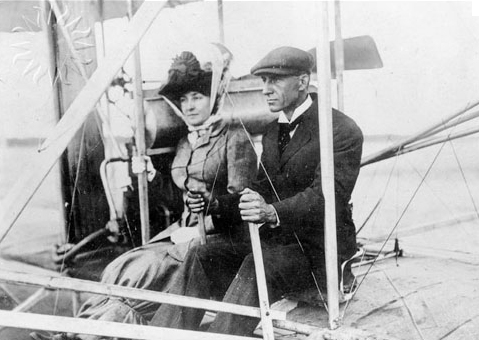
               A man named Paul Poiret claimed to have come up with the idea for the "Hobble Skirt" though it became a high fashion that started in the early 1800's it still held on until 1910 in America though it was starting to fade into the fashion of the past. Women soon began to search for clothing that was easier to wear because with the skirts so tight around the legs made it very difficult to walk around. The hobble skirt, was high in fashion around 1910-1919. It was originally created in Franc by a man named Paul Poiret the term "Hobble skirt" wasn't in use in America until 1910. What was said to have inspired Paul Poiret was Mrs. Hart Berg. She was the "first American woman to join the Wright brothers in the air." History says that she tied her skirts with a rope just below the knees (to keep her skirts from flying back as the plane was in flight) thus creating the first hobble skirt.

 Primary source:
"Between 1910 and 1913, the hobble skirt reigned supreme in fashion, obtaining popularity from the Oriental- and Directoire-inspired crazes. These skirts were extremely slim to the point of forcing women who wore them to take tiny, mincing “geisha-like” steps, and nearly barring them from independent movement (it is rather curious that as the suffrage movement moved to militancy, fashions for women became restricting). Though the hobble skirt was denounced as unsafe, and some employers even barred their female workers from wearing them, a few factions approved of the trend: 'Grandmothers think that the means justify the end, and that the hobble skirt will bring back to women the old grace. They will be compelled to shorten their strides, learn to place their feet in a straight line, and not throw them in or out in the slovenly modern way, and that the entire appearance of women will be thus benefited.'"
    
Purpose:
       As it was discovered earlier, the hobble skirt was inspired by Mrs. Hart Bret. But there are other resemblances... "The hobble skirt, which reached its peak of popularity in 1910, was a variation on the harem skirt designed by Poiret to resemble the styles of the Middle East" 

Value:
      This is an expression of the time because women suffrage entered the twentieth century and women began expressing themselves more. In 1913, a Women's suffrage parade was attacked by a mob on the eve of President Wilson's inauguration. Many women were injured but no arrests were made. 


Limitations: 
     This specific item by its self isn't enough to tell us anything about the time period...

Monday, April 14, 2014

1900-1909: First Changes

1900-1909: First Changes in American clothing

                                                    
     Origin: 
         In the Edwardian Era (1901-1910) which was also known as "The Last Age of Elegance" King Edward VII enjoyed beauty and elegance, so during his reign the fashion changed from the large skirts, and large sleeves of the Victorian era (from: 1837-1901) to the small waisted, silhouette, and "curvy"  dress of the Edwardian era. 
 Primary Source: "The woman of 1901 presented a new, flowing silhouette unlike that of any of her Victorian predecessors. Her skirt curved outwards over her full behind, downwards and apparently slightly inwards towards knee-level and then sharply outwards again at the hem. This gave the appearance of a concave skirt. It often extended into a sweeping train, even during the day. Carried out in soft, flowing fabrics and with little drapery to interrupt the outline, it could reveal more of the figure than the slim but stiff and heavily draped skirts of the late 1870's for example. The bodice above was usually moulded on a tight, and well-boned foundation. The outer layer was cut a little fuller and longer in front than the lining and was arranged to droop over the waistband. The sleeves of 1901 were quite tight at the top but flared out from below the elbow, drooping over the tight cuff. The whole effect was curved, flowing and extremely feminine."
     Purpose:
        The dress style was changed mainly because of the change in the corset style, this was mainly due from the transition from the Victorian era to the Edwardian Era. The main purpose of the corsets was to force the waist in to form and fit into the slim figure of the dresses.
                                                      
                                                      Edwardian S-curve Corset


                                                (1841 - La Mode Illustre) (Victorian Dresses)

                      Worth evening gown1890s   

                                       (Edwardian Evening Gown)                                (Oblivion -1905)

     Value:
       The Edwardian dress is an expression of the time period because it shows the desire that the people (aristocrats) had for elegance and beauty. It gives an insight to the artistry of the first decade of the 20th century.

     Limitations:
        The fashion from 1900-1909 can't really tell about the politics of the time. Not all the people dressed in fancy dresses, so it doesn't really tell about the true economic position of the time. The corset was common for all women who could afford them, but the fancy dresses were mainly for those who could truly afford them (aristocrats).